

How moving beyond payments, rewarding builders, and thinking long term led to Paystack’s new holding company
For most of its life, Paystack has been known for one thing, helping African businesses accept payments online. That focus carried the company from its early days in 2016 to a $200 million acquisition by Stripe, and later into five African markets processing trillions of naira every month.
But over the past year, something changed.
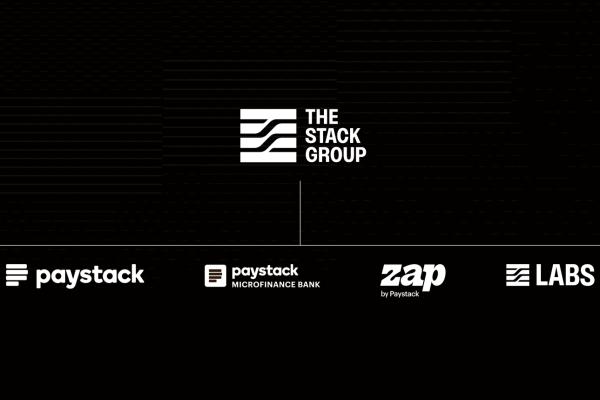
Paystack is now profitable as a group, generating positive cash flow every month, and the company is no longer just a payments business. That shift is what led to the creation of The Stack Group (TSG), a new holding company that now sits above Paystack, Zap, Paystack Microfinance Bank, and a venture studio called TSG Labs.
According to Paystack’s co-founder and chief executive officer, Shola Akinlade, the decision was less about corporate restructuring and more about acknowledging reality. “TSG signals a larger scope of ambition for us and sets the tone for the next decade of our company,” he said.
From one product to several bets
After Stripe acquired Paystack in 2020, the company spent years strengthening its payments infrastructure and expanding across the continent. At the same time, it started asking a bigger question: what else could be built on top of that foundation?
That question led to Zap, a consumer payments app, and later to Paystack Microfinance Bank. Each product came with its own users, regulators, and operating challenges. Keeping everything under a single company began to feel limiting.
“What we realised is that we’re evolving from being a single-product company to a multi-brand technology group,” said Amandine Lobelle, chief operating officer of The Stack Group. “That means moving from payments alone to multiple brands and multiple types of technology.”
TSG is the structure that makes that evolution possible. It allows Paystack’s core merchant payments business to stay focused, while newer products run independently, with their own roadmaps and risk profiles.
A different kind of ownership
Although Stripe still owns Paystack, the holding company introduces a new ownership layer. The Stack Group is jointly owned by Akinlade, Stripe, and Paystack employees, known internally as Stacks.
For Lobelle, this model was important. She said it ensures that the people building the business are rewarded for its long-term success, while still benefiting from Stripe’s global reach and credibility. She declined to share details of the cap table, but described the relationship with Stripe as foundational rather than controlling.
“The beauty of this model is that it rewards the people who are building the company, while also maintaining the global backing of one of the leading payments companies,” she said.
Profitability changes what is possible
One reason this restructuring is happening now is financial stability. Since joining Stripe, Paystack’s payment volumes have grown more than twelve times. That scale has pushed the group into profitability, giving it the freedom to experiment without putting its core business at risk.
With a stronger balance sheet, Paystack can afford to make longer-term bets, including through TSG Labs, its venture studio. The lab is focused on building new products, not all of which will fit neatly into fintech.
“We’re not moving away from financial technology,” Lobelle said. “We’re expanding our scope. Emerging technologies could include AI or stablecoins. The mandate is to solve both fintech and non-fintech problems that are critical to Africa’s digital future and development.”
Cleaner lines for regulation and risk
Another motivation for the holding company is regulation. Payments, banking, and consumer financial products are regulated differently and carry very different levels of risk.
By separating these businesses under a holdco, licences, compliance, and risk management can be handled independently. Issues in one business no longer automatically spill into the rest of the group. Lobelle noted that if Zap’s ₦250 million regulatory fine had happened after TSG was created, it would not have affected the group’s other companies.
Autonomy over control
Despite creating a parent company, TSG is not trying to centralise everything. Each subsidiary will build its own leadership structure based on its stage and needs. The holding company will focus on governance, culture, and long-term direction rather than daily operations.
TSG will also maintain its own board, separate from those of its subsidiaries, continuing Paystack’s approach to governance and regulatory compliance. Employees will remain within their existing companies, although an optional secondment programme will allow people to work across businesses when it makes sense.
The hard part still lies ahead
Moving into consumer payments and banking puts Paystack in direct competition with companies that have spent years building offline distribution and physical networks. Paystack knows that success in online payments does not automatically translate into consumer finance.
Beyond Paystack Terminal, which failed to replicate the company’s online dominance, the group does not yet have a strong physical footprint. Whether TSG can execute on these new fronts remains an open question.
Still, the company believes the structure gives it a better chance.
“You can think of competition as a finite game, us versus another player, or as an infinite game, where it’s us versus our ambition,” Lobelle said. “We operate with the mindset of an infinite game.”
For Akinlade, the motivation comes from years of working closely with African businesses. Payments, he believes, are only one part of a much larger set of problems worth solving. TSG, he said, is the framework that finally allows Paystack to go after them with intention.
