
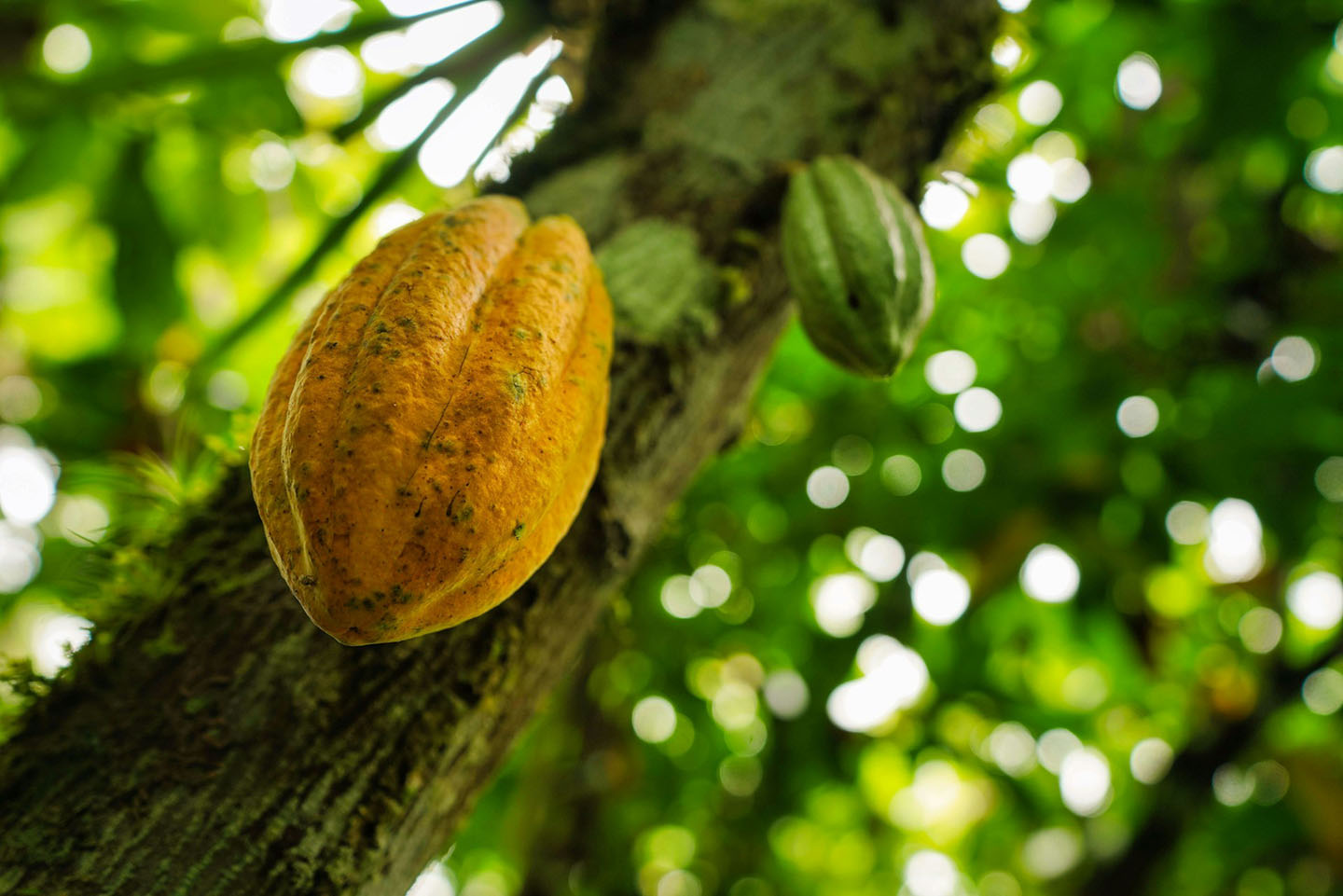
A Closer Look At The Farm Goods Fueling Nigeria’s Q3 2025 Export Growth
Agriculture continued to anchor Nigeria’s non-oil export performance in the third quarter of 2025, with earnings reaching ₦782,421.62 million. The period recorded consistent international demand for both raw and semi-processed commodities, especially cocoa. While cocoa dominated the export basket, cashew and sesame also reinforced Nigeria’s relevance in the global commodities market.
The NBS Foreign Trade in Goods Statistics for Q3 2025 highlights the following five products as the highest-earning agricultural exports.
1. Standard Quality Cocoa Beans – ₦254,125.57 million
Standard grade cocoa beans were the biggest contributor to agricultural export revenue, accounting for 32.48 percent of the sector’s value in Q3 2025. With Nigeria supplying approximately 6.5 percent of global cocoa exports, the country maintained a solid footprint in the international market.
Belgium was the top destination with imports worth ₦108,271.30 million, supported by its large chocolate-processing industry. The Netherlands followed at ₦67,680.30 million, benefiting from its position as a European logistics hub. Other notable importers included Turkey (₦30,713.13 million), Malaysia (₦14,705.58 million), and Canada (₦13,749.87 million).
This grade falls under the Grade II category with allowances for mould, slaty, insect-damaged, and partially fermented beans. Although the quality is not premium, the consistency of supply and competitive pricing keeps demand steady.
2. Superior Quality Cocoa Beans – ₦193,963.47 million
Superior grade cocoa beans ranked second, contributing 24.79 percent of agricultural export value. As Grade I cocoa, the beans meet tighter specifications in terms of mould content and fermentation standards, making them more attractive to premium chocolate producers.
The Netherlands was again the leading importer at ₦79,316.33 million, while Malaysia (₦33,361.72 million), Belgium (₦31,197.37 million), and Indonesia (₦25,316.35 million) followed closely. Canada also featured with purchases amounting to ₦14,351.46 million.
The scale of demand across Europe and Asia reinforces Nigeria’s importance as a supplier capable of meeting diverse quality requirements across global cocoa-processing markets.
3. Natural Cocoa Butter – ₦87,815.92 million
Natural cocoa butter came in third with 11.22 percent of total agricultural export value, generating ₦87,815.92 million. Nigeria remains one of Africa’s key cocoa-processing hubs, allowing it to export not only raw beans but also refined cocoa derivatives.
Germany accounted for the overwhelming majority of demand, purchasing ₦78,998.84 million worth of cocoa butter for use in confectionery, pharmaceuticals, and cosmetics. The Netherlands followed with ₦6,984.40 million, while South Africa imported ₦1,832.69 million.
The strong demand for cocoa butter highlights increasing global preference for value-added products rather than raw commodities.

4. Cashew Nuts in Shell – ₦58,800.50 million
Cashew nuts in shell were Nigeria’s fourth-largest agricultural export in Q3 2025, contributing ₦58,800.50 million. The bulk of the export volume went to Asia, which hosts the world’s largest cashew-processing clusters.
Vietnam led with imports of ₦48,812.21 million, reaffirming its dominance in global cashew processing and re-exports. India followed with purchases worth ₦9,718.83 million. Smaller but emerging destinations included the Netherlands (₦191.49 million), Bangladesh (₦52.62 million), and Egypt (₦25.35 million).
The export pattern reveals strong dependence on Asian processors, but growing interest from Europe and Africa signals potential for market expansion and greater value retention through local processing.
5. Sesamum Seeds – ₦48,786.68 million
Sesamum seeds took the fifth position with a revenue contribution of ₦48,786.68 million, representing 6.24 percent of agricultural exports.
The global appeal of sesame continues to rise due to its oil quality and wide applications in pharmaceuticals, cosmetics, and food industries. Major buyers of Nigerian sesame include Japan, China, Turkey, and countries across the Middle East. Nigeria’s competitive pricing and reliable output have helped sustain demand from these markets.
